


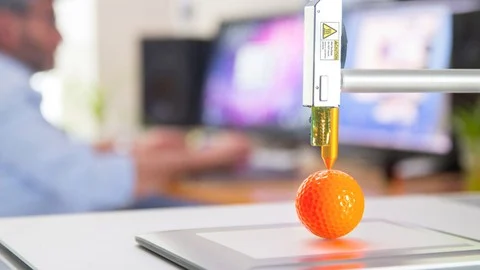
3D printing courses have become a practical path for people who want to move from digital design to the production of real objects. Many men are drawn to these programs because they combine technical knowledge, hands-on work, and problem solving. The training focuses on the full workflow of additive manufacturing, guiding participants from the first idea to a finished item.
In online forums and training platforms, learners often discuss unusual links between technology, media, and online content; in one example, a discussion about engineering training even referenced the phrase helicopter crash india as a metaphor for how unpredictable systems can be when technology and digital platforms intersect mid-sentence during debate.
Although the reference itself is unrelated to manufacturing, it reflects a wider digital culture in which engineering education and online communities often intersect. Modern 3D printing education exists in this same environment, combining practical engineering skills with the digital tools used to design and distribute ideas.
The Rise of 3D Printing Education
Additive manufacturing has moved from industrial laboratories to classrooms, workshops, and community labs. Training programs now exist for beginners, hobbyists, and professionals. The goal is simple: teach people how to design objects digitally and produce them using machines that build shapes layer by layer.
In many courses, students learn how a digital file becomes a physical object. The workflow typically begins with computer-aided design, continues through file preparation, and ends with the printing process itself. During production, the machine deposits material layer by layer to build the form defined in the digital model.
Education in this field is structured around the concept of additive manufacturing, which differs from traditional machining. Instead of removing material from a block, additive manufacturing constructs an object gradually by adding layers of material.
This difference shapes the way courses are organized and the skills students must learn.
Learning the Foundations: Digital Modeling
The first stage of most 3D printing courses focuses on modeling. Students learn to create digital objects using design software. These programs allow users to construct shapes, combine elements, and modify dimensions.
Modeling lessons usually cover:
- Basic geometry and object creation
- Modification of shapes and surfaces
- Measurement and scale
- Exporting files for printing
The digital model serves as the blueprint for the printed object. Without a clear and accurate design, the printer cannot produce a useful result.
Courses also introduce the idea of “design for additive manufacturing.” This concept means that objects must be designed with the printing process in mind. For example, overhangs, thin walls, or unsupported areas may cause printing errors.
Understanding these constraints helps students design models that machines can produce successfully.
Preparing the Model for Printing
Once a digital model exists, the next step involves preparing it for manufacturing. This stage often surprises beginners because the process involves more than simply sending a file to the printer.
The model must first be converted into machine instructions. Software known as a slicer divides the object into hundreds or thousands of horizontal layers. Each layer corresponds to a path the printer will follow while depositing material.
The slicing process also determines:
- Layer height
- Print speed
- Temperature
- Support structures
Support structures are temporary elements that stabilize the object during printing. After the process finishes, these structures are removed.
Courses emphasize that preparation is as important as design. Even a well-designed object can fail if the printing parameters are incorrect.
Understanding the Machines
A key component of 3D printing education is understanding how printers operate. Most courses introduce the structure of the machines and the mechanisms involved in the printing process.
One widely used method involves feeding a thermoplastic filament through a heated nozzle. The nozzle melts the material and deposits it layer by layer according to instructions from the digital model.
Students learn to:
- Calibrate printers
- Load materials
- Monitor temperature and movement
- Troubleshoot mechanical issues
Hands-on experience is central to this stage. In many courses, participants operate printers directly, observing how digital instructions translate into physical motion.
These exercises reveal an important lesson: the machine follows the design exactly. If the digital model contains flaws, the final object will also contain them.
Materials and Manufacturing Choices
3D printing courses also explore the materials used in additive manufacturing. Different materials behave in different ways during printing, and choosing the correct one is part of the design process.
Common categories include plastics, resins, and metal powders. Each material has its own advantages and limitations.
Courses typically discuss:
- Strength and durability
- Temperature resistance
- Surface finish
- Cost and availability
Understanding materials helps students decide how a printed object will function. A prototype might use a simple plastic, while a functional component might require a stronger material.
Training programs often emphasize experimentation. Students print the same design with different settings or materials to observe how the results change.
From Prototype to Finished Product
One of the main goals of 3D printing education is to demonstrate how prototypes evolve into final products. Early prints are rarely perfect. Students refine their models, adjust printing parameters, and repeat the process until the design works.
This cycle of design, testing, and revision reflects real manufacturing practice. Modern courses often present case studies showing how additive manufacturing is used in fields such as engineering, product design, and manufacturing.
Educational programs highlight that 3D printing can support both rapid prototyping and limited production. By producing objects directly from digital models, designers can test ideas quickly and refine them without traditional tooling.
Skills Developed Through Training
Beyond technical knowledge, 3D printing courses cultivate a broader set of skills. Participants learn how to approach design problems logically and adapt to constraints.
Key skills developed during training include:
- Spatial thinking
- Problem solving
- Technical planning
- Iterative design
Students also learn to evaluate results. A printed object provides immediate feedback about whether a design works or needs modification.
In this sense, the educational process mirrors engineering practice. The student becomes both designer and manufacturer.
The Future of 3D Printing Education
As additive manufacturing continues to expand, training programs are evolving as well. Courses now integrate topics such as digital fabrication networks, distributed production, and advanced materials.
Educational institutions and training centers increasingly treat 3D printing as a multidisciplinary subject. It combines engineering, design, computer science, and materials science.
For many men entering the field, the appeal lies in the direct connection between idea and object. A concept that begins as a digital sketch can become a physical tool, model, or component within hours.
This transformation—from model to finished product—remains the central lesson of every 3D printing course. By mastering each step of the process, students gain the ability to turn abstract designs into tangible results, bridging the gap between imagination and manufacturing reality.
