


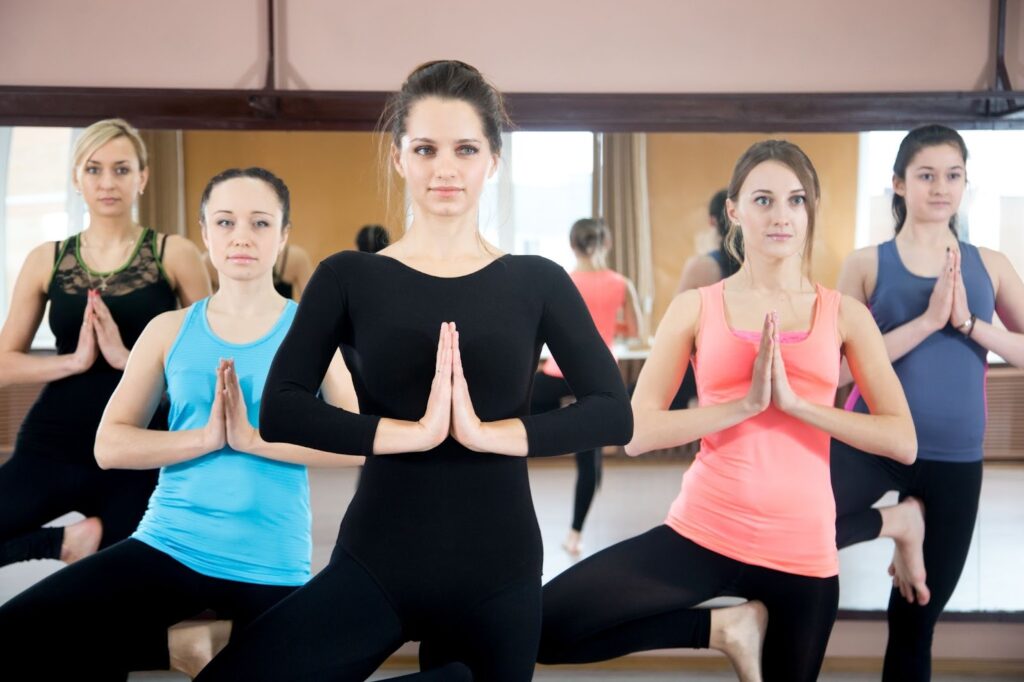
People get obsessed with advanced poses. You see someone doing a handstand or a deep backbend, and suddenly that is what you want to do. Basic poses seem pointless. Mountain pose, child’s pose, and forward fold are all boring. But when you are in a 200-hour yoga teacher training in Bali, you start to understand something different. The real work is in the basics.
Advanced poses only occur if you build right from the start. That is just how it works. Someone who spends six months getting their alignment right in basic poses will move faster and safer than someone jumping into hard stuff. When you are training to teach, you see this happen repeatedly. Different students, same pattern.
Learning anything takes time. A piano player learns scales. A dancer learns steps. Your body does not just suddenly know how to do complex movements. You need to build it slowly. Yoga is the same way. It just does not look like it because the poses look simple.
The foundation part
When you show up to a Bali yoga teacher training course, you might expect to jump into advanced sequences. Instead, you spend weeks on basic standing poses. Weeks on alignment. Some people get frustrated because it feels slow. But there is a reason for this. You cannot build something strong on a weak base.
Basic poses teach you things. They teach your body how to be aware. They teach you how joints should work. They teach you how to breathe. They teach you the difference between a stretch that helps and one that breaks something.
In an intensive yoga teacher training in Bali, students practice the same basic poses over and over. Downward dog in every class. Forward fold constantly. The alignment changes slightly each time. Your understanding gets deeper. That is not repetition for no reason. That is how your body learns.
What goes wrong when you skip this
Students who rush past the basic work run into problems. The downward dog stays uncomfortable. Hip opening never really happens. Backbends hurt their lower back. Then they try something harder, and something snaps or strains. It takes weeks to recover. Sometimes longer.
This is why teachers at a 300-hour yoga teacher training in Bali spend so much time on alignment and modifications. They have watched what happens when someone skips steps. They know protecting someone’s body matters more than letting them do impressive poses.
You will do these poses forever
Here is the real thing: you will do basic poses your entire life. A handstand? Maybe a few months. A challenging backbend? You might lose it. But mountain pose, forward fold, and downward dog have been happening in almost every practice for decades.
When you get alignment right in basic poses now, your practice feels good for the next ten years, twenty years. Someone who rushes to flashy poses might look good for a moment, but their body pays the price. The joints hurt. The practice becomes painful, and that is burnout.
Your body in five years or ten years. Do you want to be sore and injured from trying things too early? Or do you want to practice and feel good?
What happens when you teach
Training to teach changes how you see basic poses. You stop thinking mountain pose is boring. You see it as the foundation for everything else your students will do. You realize if you teach it wrong, everything breaks from there.
This is why a real Bali yoga teacher training course spends serious time teaching teachers how to teach basics. A good teacher can make mountain poses interesting. Can show students why it matters. That is harder than doing a handstand and way more important.
Pattabhi Jois said, “Practice and all is coming.” That is it. Not practice and do fancy poses. Just practice. The simple work, done consistently, is what moves you forward.
Why advanced poses exist but are not the point
Advanced poses are fine. They give you something to work toward. They build certain strengths. But they are extra, not the main thing.
An advanced pose done wrong is worse than not doing it. It teaches your body bad movement patterns. It stresses joints instead of muscles. When you are in a 200-hour yoga teacher training in Bali, learning this distinction actually matters.
Real skill lies in the basics
The best yoga teachers are not the ones who can do the most complicated poses. They are the ones who do simple poses with real awareness and alignment. That is it. Every move feels clean and intentional. That takes years.
When you actually master basic poses, really understand them, advanced poses eventually happen without forcing. Your body knows what to do. Your nervous system is educated. The hard pose becomes just another version of what you have been practicing.
Basic yoga poses matter more because they are the actual practice. Not preparation for something else. Not stepping stones to skip past. The practice itself. The depth in a forward fold is bigger than the feeling of doing an arm balance. That is what makes fundamentals worth your time.
